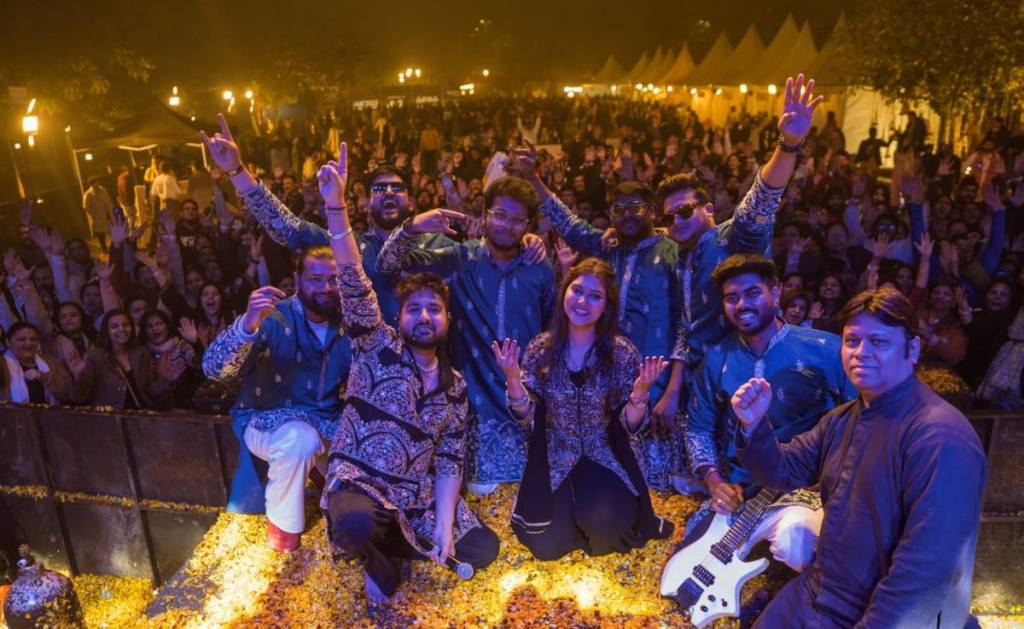
In recent years, a quiet shift has been visible in India’s urban youth culture. Instead of nightlife centred around alcohol and spectacle, many young people are gravitating towards collective, meaning-oriented experiences. One such emerging phenomenon is Bhajan Clubbing—where devotion, music, and community intersect in contemporary forms.
What is Bhajan Clubbing?
Bhajan clubbing refers to youth-driven devotional gatherings where traditional bhajans are performed in concert-like, high-energy environments.
The format borrows from modern music culture—sound systems, lighting, collective singing—but remains alcohol-free and devotion-centred.
Why Is This Trend Emerging?
- Growing disconnect with substance-led nightlife
- Desire for community, meaning, and emotional grounding
- Youth preference for participatory experiences over passive rituals
- Reinterpretation of tradition without rejecting it
This is not abandonment of faith.
It is re-engagement on new terms.
What Does It Indicate About Society?
- Shift from institution-centric to experience-centric spirituality
- Tradition being adapted, not diluted
- Collective rhythm replacing individual isolation
- Spirituality entering public, social, youth spaces
Rather than temples becoming clubs,
clubs are absorbing sacred intent.
Socio-Cultural Significance
- Reflects a shift in youth engagement with spirituality—from ritual obligation to voluntary participation.
- Indicates adaptation of tradition rather than cultural decline; heritage survives by changing form, not freezing itself.
- Highlights growing demand for community-based, sober social spaces among young Indians.
- Shows how spirituality is moving beyond institutions into everyday social life.
- Challenges the binary of modern vs traditional by demonstrating their coexistence.
- Illustrates youth-led cultural renewal, where younger generations reinterpret inherited practices.
- Reinforces the idea that culture is dynamic, lived, and participatory, not merely preserved.
Key Terms (For Mains Enrichment & Essay Value Addition)
- Sacralised Social Spaces – Social environments that carry sacred meaning without formal religious settings
- Neo-Spiritual Collectivism – Community-based spirituality shaped by contemporary youth culture
- Cultural Recontextualisation – Placing traditional practices within modern social contexts
- Experiential Spirituality – Spiritual engagement through participation and shared experience
- Sober Hedonism – Collective joy and transcendence without substance use

 CIRCULAR LEARNINGS
Leave a reply to HH Prabhu Ji Cancel reply