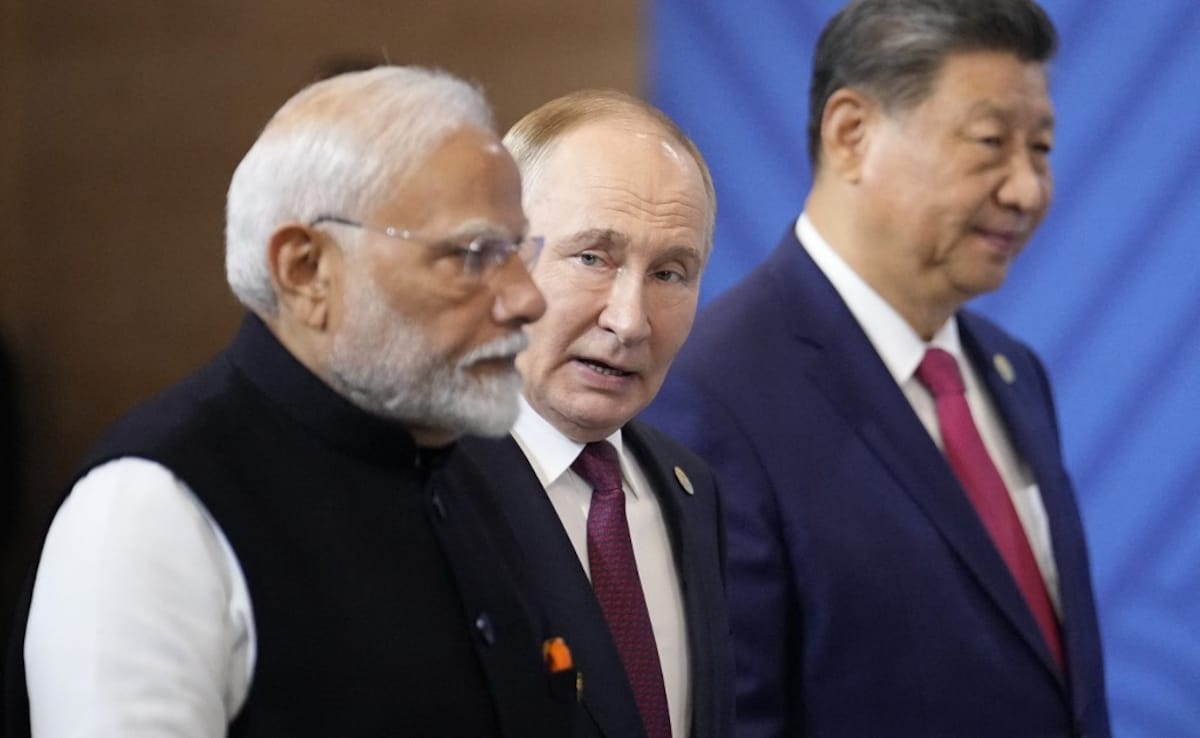
As BRICS approaches its 20th anniversary in 2026, India assumes the Chairship at a time of visible churn in global governance. The international system is gradually shifting from a unipolar structure to a more fragmented, multipolar order. In this context, India’s presidency is not symbolic alone—it is strategically significant for the Global South and for India’s own multi-aligned foreign policy.
1. Why 2026 Matters
- BRICS was conceptualised in 2006 and held its first summit in 2009.
- It now represents nearly half of the world’s population and about 40% of global GDP.
- The grouping has expanded significantly (2024–25), moving beyond its original five members.

India’s Chairship coincides with:
- Expansion of BRICS+
- Increasing Global South activism
- Growing debate over reform of global institutions (UNSC, IMF, World Bank)
2. India’s Presidency Priorities: The RICS Framework
India has articulated four broad priorities for 2026:
(1) Resilience
- Supply chain stability
- Financial safety nets
- Climate justice under CBDR (Common but Differentiated Responsibilities)
(2) Innovation
- Promotion of Digital Public Infrastructure (DPI)
- Technology for Sustainable Development Goals (SDGs)
(3) Cooperation
Strengthening three pillars:
- Political & Security
- Economic & Financial
- People-to-People exchanges
(4) Sustainability
- Climate finance
- Green development pathways
- Balanced approach to energy transition
This reflects India’s attempt to position BRICS as a reform-oriented, development-centric platform rather than an ideological bloc.

3. Expansion and the “BRICS+” Model
Recent years have seen rapid expansion:
- 2010: South Africa joined.
- 2024: Egypt, Ethiopia, Iran, Saudi Arabia, UAE.
- 2025: Indonesia as full member.
- Partner country model introduced for broader outreach.

Strategic Significance
- Enhances representation of the Global South.
- Expands geographic footprint (West Asia, Africa, Southeast Asia).
- Raises internal coordination challenges due to diversity of political systems.
India supports expansion but remains cautious to prevent:
- Over-centralisation around China.
- Transformation of BRICS into an overt anti-West bloc.
4. Financial Architecture and De-Dollarisation Debate
Economic cooperation remains core to BRICS.
Key Institutions
- New Development Bank (NDB)
- Contingent Reserve Arrangement (CRA) – $100 billion liquidity mechanism
- Emerging BRICS Multilateral Guarantee Mechanism (BMG)
Local Currency Trade
- Push for settlement in national currencies.
- Development of BRICS Pay framework.
- No formal proposal for a common BRICS currency.
India’s Position
India supports reducing excessive dollar dependence but:
- Avoids confrontation with the US.
- Rejects yuan-dominated alternatives.
- Maintains strategic autonomy in energy settlements.
This reflects India’s calibrated approach—pragmatic reform rather than ideological de-dollarisation.
5. India’s Strategic Balancing
India’s foreign policy operates on multi-alignment:
- Member of BRICS+
- Participant in QUAD
- Engages with G7 and Global South platforms
Core Balancing Factors
- Managing competition with China within BRICS.
- Protecting IBSA (India–Brazil–South Africa) democratic coordination.
- Using BRICS to push reforms in:
- UN Security Council
- IMF quota structures
- Global financial governance
India’s 2026 role will test its ability to function as:
- A bridge between developed and developing worlds.
- A reformist voice rather than a disruptive power.
6. Key Issues for Analysis
Opportunities
- Greater Global South solidarity.
- Alternative development financing.
- DPI export as a global public good.
- Climate cooperation without Western conditionalities.
Challenges
- Internal contradictions among members.
- China’s economic dominance.
- Western perception of BRICS as anti-Western.
- Institutional coherence in an expanded grouping.
7. Way Forward
- Institutional strengthening of NDB.
- Clear criteria for expansion to maintain coherence.
- Focus on development outcomes over rhetoric.
- Balanced engagement with both Western and non-Western blocs.
Conclusion
India’s 2026 BRICS Presidency comes at a decisive moment in global politics. As the world adjusts to multipolar realities, BRICS is evolving from a financial acronym into a platform for institutional reform and Global South coordination.
The real test for India will not be symbolism, but strategy—managing rivalry with China, engaging constructively with the West, and shaping BRICS into a credible, development-oriented pillar of the emerging world order.