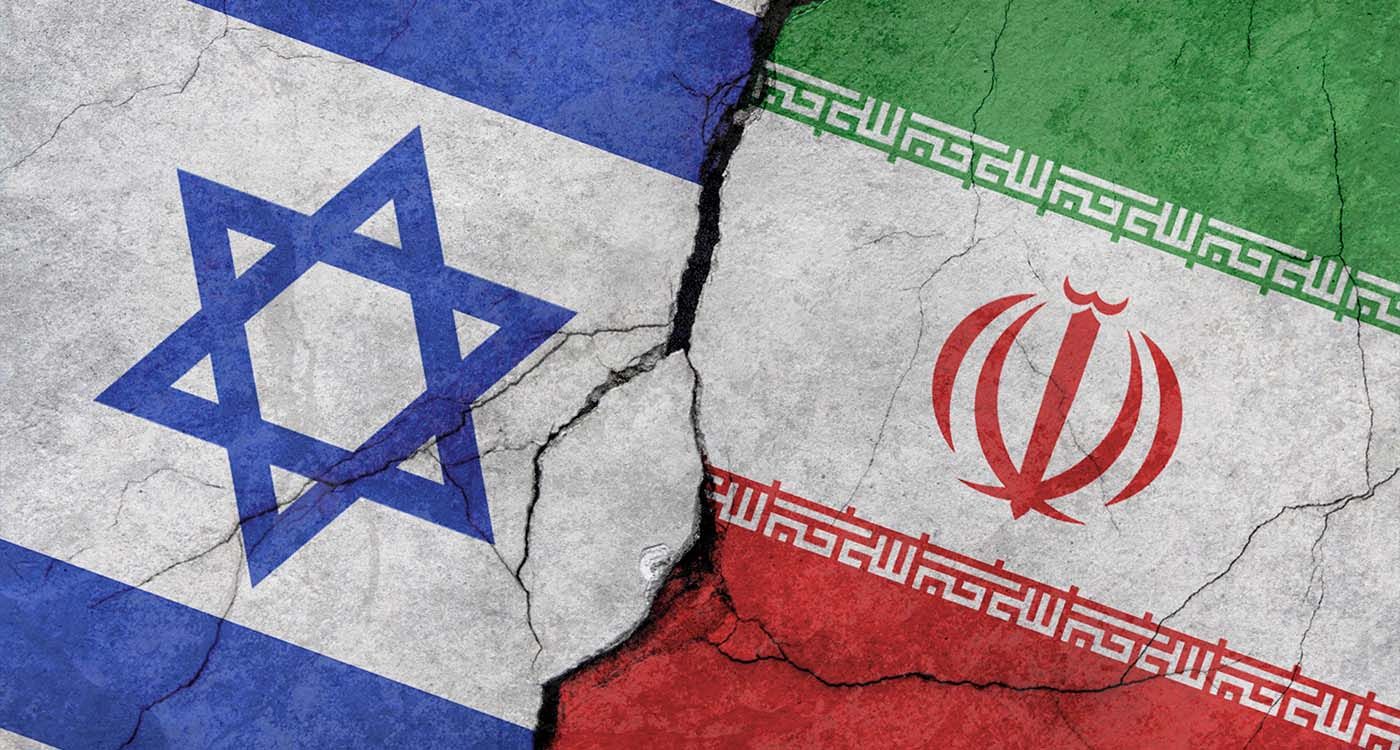
The Israel–Iran confrontation did not erupt suddenly in 2026. It is the culmination of a rivalry that began with the 1979 Iranian Revolution and has steadily expanded from covert maneuvering to open confrontation. What started as ideological hostility evolved into a regional power contest — and has now matured into a direct military clash with global implications.
This is not merely a bilateral dispute. It is a struggle over the balance of power in West Asia.
From Covert Partners to Ideological Adversaries
In the late 1970s, Iran under Shah Mohammad Reza Pahlavi maintained discreet but substantive defence ties with Israel. Military cooperation, including missile development arrangements, reflected a shared alignment with the United States.
The 1979 Revolution overturned that equation completely.
Ayatollah Khomeini’s Islamic Republic reframed Iran’s foreign policy identity around opposition to the U.S. and Israel. The new regime positioned the “liberation of Jerusalem” as both ideological commitment and geopolitical strategy. Where the Shah’s Iran had functioned as a pillar of the U.S.–Israel security architecture, revolutionary Iran emerged as its principal challenger.
This shift was not tactical — it was structural.
The Emergence of a New Regional Contest
The late 1970s and early 1980s were already transforming Arab–Israeli relations. Egypt’s recognition of Israel in 1978 signaled that major Arab powers were recalibrating their positions.
Iran stepped into this shifting landscape differently.
Rather than confronting Israel conventionally, Tehran adopted a strategy of forward defence — building influence through non-state actors. Hezbollah in Lebanon became the most prominent example. In the 1990s, support for Hamas and Islamic Jihad deepened Iran’s footprint in the Palestinian arena.
Through Iraq, Syria and Lebanon, Iran cultivated what later came to be described as the “Shia Crescent” — extending its strategic depth to Israel’s northern borders.
For Israel, the challenge was no longer conventional Arab armies. It was a networked adversary operating across multiple theatres.
Nuclear Ambitions and Escalating Suspicion
As Iran expanded its regional reach, its nuclear programme became the most contentious issue between Tehran and Washington — and by extension, Tel Aviv.
Iran consistently maintained that its nuclear programme was peaceful. The United States and Israel viewed it as a potential pathway to weaponization.
The 2015 Joint Comprehensive Plan of Action (JCPOA) sought to cap Iran’s nuclear activity in exchange for sanctions relief. Most global powers endorsed the agreement. Israel opposed it, arguing that it legitimized rather than eliminated long-term risks.
When the United States withdrew from the deal in 2018 and reimposed sanctions, tensions resurfaced. Iran resumed enrichment beyond earlier limits. Israel intensified covert actions targeting Iranian facilities and scientists.
The rivalry remained largely indirect — but increasingly combustible.
The Proxy Wars and Strategic Overstretch
In Lebanon, Hezbollah’s resistance forced Israel’s withdrawal in 2000. In 2006, despite intense Israeli bombardment, Hezbollah survived — reinforcing Iran’s forward defence doctrine.
The 2003 U.S. invasion of Iraq removed Saddam Hussein, a buffer between Iran and the Gulf monarchies. Shia political forces with historical ties to Tehran gained influence in Baghdad, further extending Iran’s regional arc.
In Syria, Iran’s intervention to support Bashar al-Assad during the civil war preserved a vital strategic corridor to Hezbollah. With Russian backing from 2015 onward, that axis stabilized.
Yet this expansion carried costs. Sanctions deepened economic strain at home. Regional entanglements multiplied.
Iran’s ascent was visible — but not uncontested.
From Shadow Conflict to Direct War
For years, Israel and Iran engaged in a shadow war:
- Israeli air strikes on Iranian assets in Syria
- Cyber operations
- Targeted assassinations
- Maritime confrontations
The October 7, 2023 Hamas attack on Israel marked a decisive shift. Israel increasingly framed Iran not merely as a sponsor of proxies, but as the central strategic adversary.
The collapse of the Assad regime in late 2024 weakened Iran’s Syrian position. Hezbollah’s operational pressures grew. Iran’s regional deterrence structure appeared more vulnerable than before.
In early 2026, indirect diplomatic engagement between Tehran and Washington suggested the possibility of renewed nuclear negotiations. Signals from Oman indicated that a breakthrough might be within reach.
Instead, coordinated Israeli and American strikes targeted Iranian nuclear and military infrastructure. Tehran responded with ballistic missile attacks against Israeli territory and U.S. bases in the region.
The shadow war had crossed into open confrontation.
The Strategic Divide: Disarmament or Survival
Israel’s objectives are expansive:
- Halt Iran’s nuclear programme permanently
- End ballistic missile development
- Curtail Iran’s network of allied armed groups across Lebanon, Syria, Gaza and Iraq.
- Reshape the regional security order
For many Israeli policymakers, durable security implies neutralizing Iran’s regional leverage altogether.
Iran, by contrast, signals willingness to negotiate nuclear limits but refuses to dismantle missile capabilities or abandon its regional alliances. It frames external pressure as an attempt at regime change.
For the Islamic Republic, this is not a tactical dispute. It is a question of survival.
A Region at a Crossroads
The implications stretch far beyond the two states.
Arab governments tread carefully, wary of escalation but unwilling to endorse either side openly. The United States has expanded its regional military posture. Oil markets remain sensitive to disruption. Diplomatic institutions appear sidelined by kinetic realities.
The rivalry that began in 1979 now shapes the architecture of West Asia. It influences alignments, corridors, proxy conflicts and security calculations across the region.
This is no longer a contained hostility. It is a contest over the regional order itself.
The Israel–Iran confrontation is the product of four decades of ideological antagonism, proxy competition and nuclear suspicion. What once unfolded through covert channels has now surfaced in overt military exchanges.
Whether the future holds negotiated containment or prolonged instability will depend on whether strategic objectives narrow — or harden.